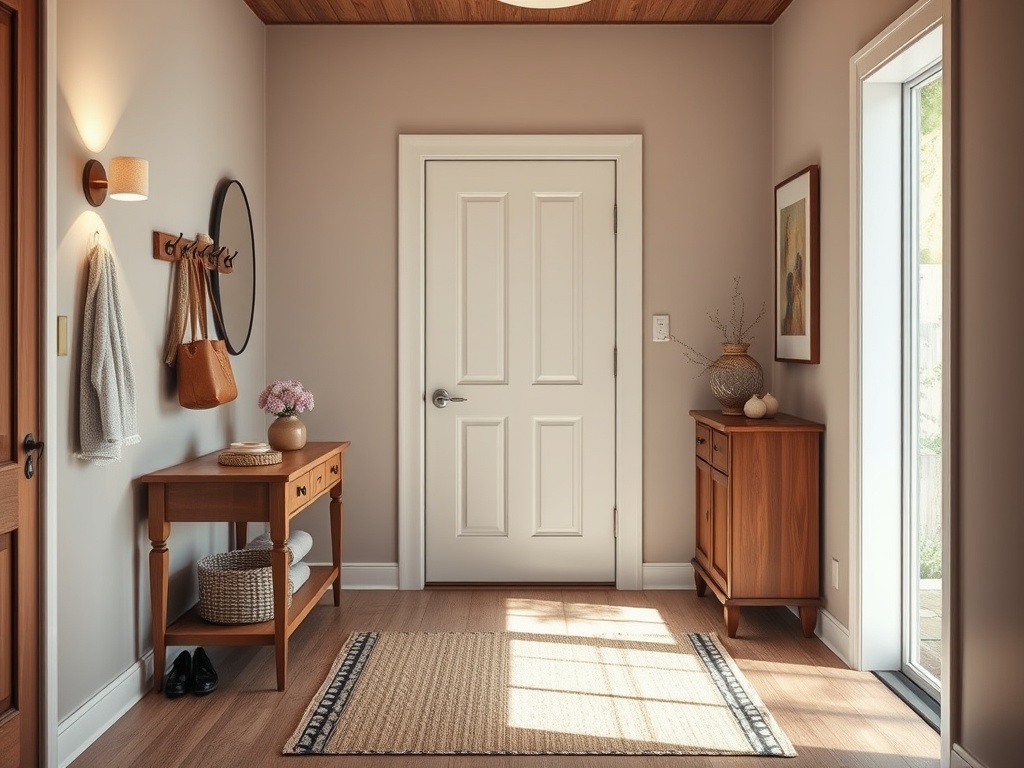

You do not need a dedicated mudroom to create mudroom-style storage. A short wall near the entry, a hallway niche, the back of a door, or a small section of garage-to-house transition can become an effective drop zone when storage is assigned by function and the main walking path stays clear.
The No-Mudroom Formula
- Choose one arrival zone instead of spreading hooks and baskets across several rooms.
- Use vertical storage first, then add a bench or cabinet only if floor space remains comfortable.
- Give shoes, bags, outerwear, mail, pet gear, and seasonal items separate homes.
- Keep tall furniture stable and preserve clear circulation, lighting, and door access.
Find the Best Substitute Zone
Look at where clutter already lands. The best mudroom substitute is usually near the door people actually use, not necessarily the formal front entry. Candidates include a side-door wall, the end of a kitchen, a short hallway, the space beside a garage entry, or a section of laundry room.
Measure the wall width, door swing, nearby switches, vents, baseboard heaters, outlets, and the clear walking path. Then list what must live there. A household that needs four backpacks and sports gear requires a different system from a one-person apartment that mainly needs shoes, keys, and an umbrella.
If the transition area is also decorative, Entryway Decor Ideas That Add Function and Warmth can help balance storage with lighting, texture, and visual calm.
Idea 1: Build a Vertical Hook Rail
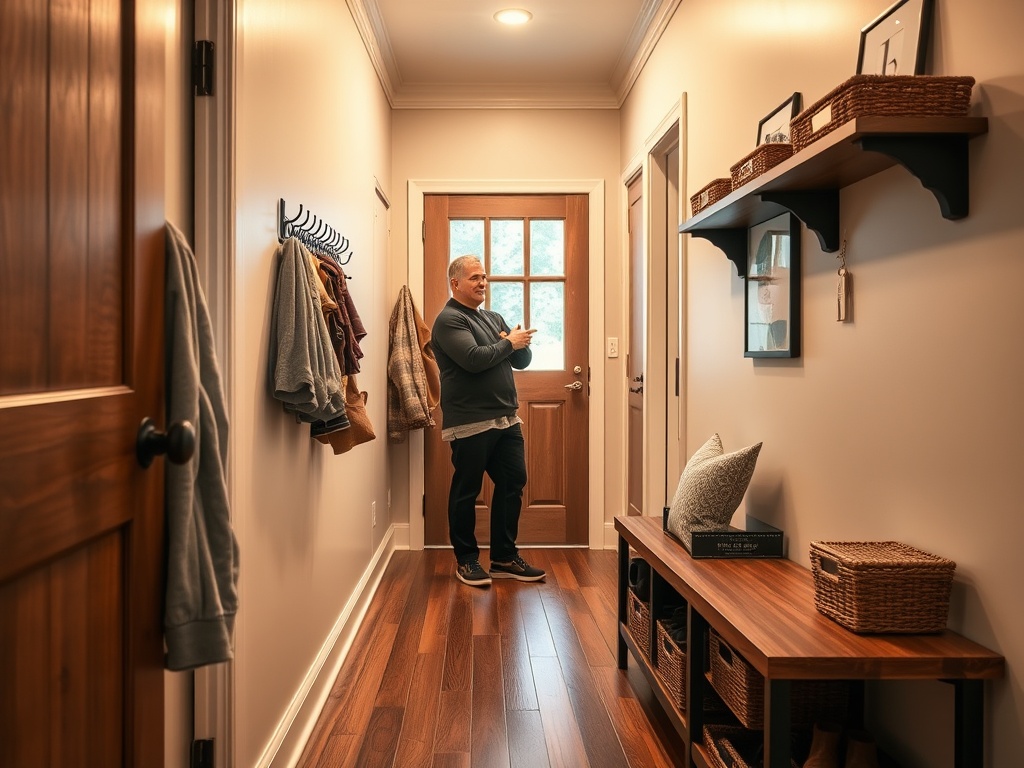
A hook rail provides high storage value with almost no floor footprint. Use it for everyday coats, bags, leashes, and hats. Install the rail into appropriate framing or with anchors rated for the wall and load.
Assign hooks rather than letting every item migrate to the easiest one. Families can use one hook per person plus one shared hook for a dog leash or umbrella. In small homes, keeping only current-season outerwear in the zone prevents the rail from becoming a packed closet on display.
Place frequently used hooks at comfortable reach. Keep heavy bags low enough that they are not difficult to lift but high enough that they do not sit in the walking path.
Idea 2: Add a Shoe Tray or Low Rack
A defined shoe boundary keeps dirt and moisture from spreading. Use a washable tray, ventilated low rack, or open cubby sized for everyday footwear.
Do not oversize the unit simply because the household owns many shoes. Store current pairs near the door and move formal or off-season footwear elsewhere. A compact active-use zone is easier to maintain.
Leave space for wet shoes to dry without soaking a closed cabinet. If the entry floor is sensitive to water, use a tray with a raised edge and clean it before salt or mud accumulates.
Idea 5: Turn the Back of a Door Into Storage
An over-door rack or properly mounted door hooks can hold light items when wall space is scarce. Check that the hardware does not interfere with the door closing, weather seal, hinges, or trim.
Avoid loading a door with heavy bags or equipment that strains the hinges. Keep stored items shallow enough that they do not hit a wall, switch, or person when the door opens.
For rentals, choose removable hardware only when it is compatible with the door and lease rules. Do not assume adhesive hooks are suitable for every paint or surface.

Idea 6: Create a Narrow Wall-Mounted Drop Shelf
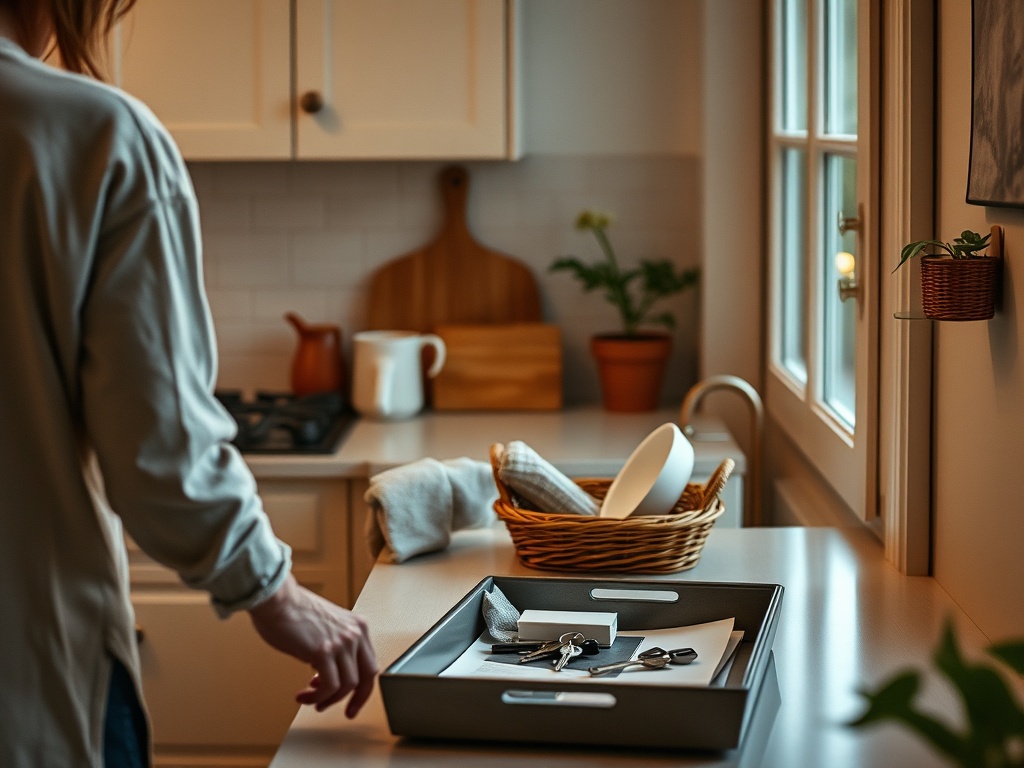
A small shelf near the door can handle keys, wallets, sunglasses, and outgoing mail. Pair it with a shallow tray so tiny items do not spread across the surface.
Keep the shelf narrower than a full console when the passage is tight. Mount it high enough to avoid hip-level collisions but low enough for comfortable daily use.
If mail builds up there, add one vertical sorter with clear categories such as action, file, and recycle. Process it on a schedule rather than adding more trays.
Idea 7: Use a Tall Cabinet Only With Safety in Mind
A shallow cabinet can hide coats, cleaning supplies, or sports gear, but tall furniture changes the safety equation. It needs enough clearance for doors to open without blocking the hall and should be secured as recommended by the manufacturer.
The U.S. Consumer Product Safety Commission's Anchor It! guidance recommends securing top-heavy furniture and keeping tempting objects that might encourage children to climb off high surfaces. Those safety principles are relevant when a mudroom substitute uses bookcases, dressers, or tall storage units not originally designed for the space.
Do not treat a generic anti-tip strap as automatically compatible. Follow the furniture and restraint manufacturer's installation instructions and use wall fasteners suited to the construction.
Idea 9: Add a Small Cleaning and Weather Kit
A compact kit near the door can contain a shoe brush, absorbent cloth, lint roller, pet towel, and a small handheld broom. Store chemicals only in their original labeled containers and secure them away from children and pets.
The kit should solve the mess where it happens. Wiping wet paw prints or brushing dried mud before it travels through the home is easier than cleaning multiple rooms later.
For a broader habit system, Micro-Cleaning Habits That Keep Homes Tidy shows how short resets can prevent a drop zone from becoming a permanent pile.
Choose a Layout by Space Type
| Space | Strongest Storage Moves | Watch For |
|---|---|---|
| Narrow hallway | Hooks, shallow shelf, shoe tray | Overly deep furniture |
| Small entry | Hooks, bench if width allows, baskets | Door swing and rug edges |
| Garage entry | Durable rack, closed bins, cleaning kit | Temperature, moisture, chemicals |
| Laundry transition | Hooks, baskets, shoe zone | Blocking appliances or vents |
| Apartment wall | Removable hooks, slim shelf, basket | Lease rules and wall damage |
These are design starting points, not universal requirements. The best layout depends on traffic, household size, storage volume, wall construction, and accessibility needs.
Common No-Mudroom Mistakes
Trying to Store Everything at the Door
The arrival zone should hold active items, not the household's entire outerwear and shoe collection. Rotate and relocate rarely used gear.
Using One Giant Basket
Large catch-all bins hide clutter rather than organizing it. Smaller categories are easier to reset.
Blocking the Walkway
A bench, plant, basket, or shoe rack is not functional if everyone has to step around it. Preserve the path first.
Mounting Without Checking the Wall
Hooks and shelves need hardware matched to the wall and load. Heavy coats, backpacks, and sports bags can exceed the capacity of decorative fasteners.
Ignoring Wet Gear
Closed storage can trap moisture and odors. Give wet shoes, umbrellas, and coats an area where they can drain or dry without damaging nearby finishes.
Create a System That Matches Arrival Behavior
A substitute mudroom works when storage follows what people actually do after opening the door. Put hooks where bags and coats naturally land, contain shoes at floor level, create a small drop surface for essentials, and keep cleaning supplies close enough to handle wet-weather messes.
Start with the smallest useful system: hooks, a shoe zone, and one drop point. Add cabinets or specialized organizers only after you know where clutter still accumulates.
Storage and Anchoring Note
This article provides general educational guidance. Wall construction, anchoring requirements, accessibility needs, electrical work, fire-safety rules, and furniture stability vary by home. Follow hardware instructions and local requirements, and use qualified help when mounting heavy storage or working near wiring, plumbing, or structural elements.
[BOX]
[BOX]