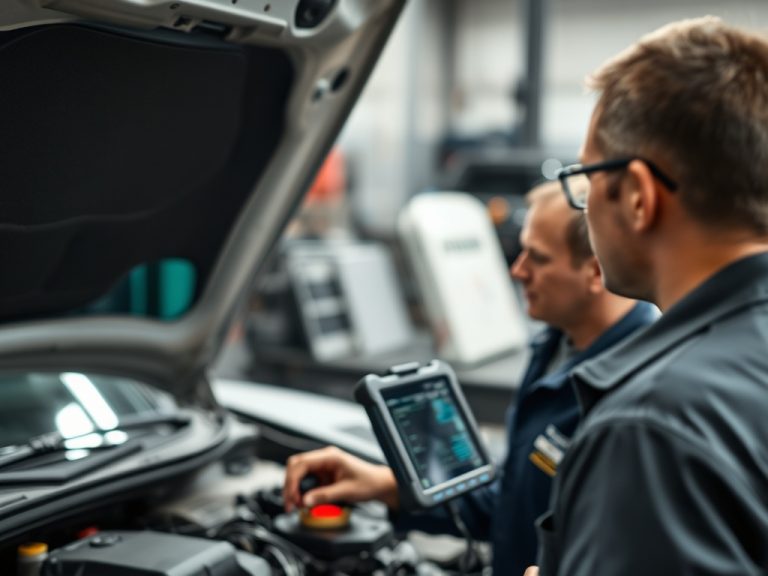
Software-defined vehicles rely on code to control more comfort, safety, battery, infotainment, driver-assist, and powertrain functions than older vehicles did. That means software checks, updates, and documentation are becoming normal parts of service, not rare tech extras.
TL;DR: Modern service may include software version checks along with mechanical inspections.
- Some updates improve convenience; others may address safety, drivability, charging, emissions, or driver-assist behavior.
- Owners should confirm update source, completion status, and any post-update calibration or road test requirements.
What Software-Defined Really Means for Service
In a traditional repair visit, the main focus might be parts, fluids, wear, and mechanical adjustment. In a software-defined vehicle, the service path may also include control-module versions, update campaigns, cybersecurity checks, calibration status, and network communication between modules. A small software mismatch can create a symptom that looks mechanical.
NHTSA’s vehicle cybersecurity research includes firmware updates through physical and over-the-air methods, which shows why software update security is now part of the larger vehicle safety conversation.
This does not mean every problem is a software problem. Tires still wear, cooling systems still leak, and batteries still fail. It means technicians increasingly have to ask whether the vehicle’s code, calibration, and connected systems are current before replacing parts.
Routine Service Now Has a Digital Layer
A shop may check for technical service bulletins, open recalls, update campaigns, module communication errors, and incomplete over-the-air updates. In some cases, an update can change shift behavior, charging logic, driver-assist performance, infotainment stability, or warning-light strategy. In other cases, software simply supports the diagnostic process by improving how the vehicle reports faults.
Because updates can affect later diagnosis, owners should save the same kind of repair and update documentation they would keep for parts or fluids.
The owner’s role is changing too. Ignoring update messages, letting a 12-volt battery weaken, or interrupting an update can create avoidable problems. The shop’s role is to explain what was updated, why it mattered, and whether any additional checks were required.
Update Types Owners Should Understand
| Update category | Typical reason | Owner question |
|---|---|---|
| Recall remedy | Safety or compliance issue | Is my VIN included and is the remedy complete? |
| Service campaign | Known performance or reliability concern | Is there any cost or warranty impact? |
| Feature or usability update | Convenience, infotainment, charging, or behavior change | What changed and can it affect settings? |

Questions Before You Say Yes to an Update
Ask whether the update is a recall remedy, a service campaign, a customer-pay improvement, or a diagnostic requirement. Those categories can affect cost, urgency, and documentation. Ask whether the vehicle must remain parked, connected to a charger, or kept online. Ask what happens if the update fails or reveals another issue.
For safety-related concerns, owners can check NHTSA recalls by VIN and should not assume a dashboard notification captures every open campaign.
If the update relates to driver-assistance features, ask whether cameras, radar, steering angle, ride height, or alignment conditions need to be verified. Software and physical setup often work together. A code update cannot compensate for a misaligned sensor or an incorrect tire size.
A Calm Way to Treat Updates as Maintenance
Build a habit around update records. Note the date, mileage, software version if provided, reason for update, and whether the shop road-tested the vehicle. If a symptom begins after an update, that record helps the shop compare before-and-after behavior.
This is similar to the logic behind using freeze frame data to speed diagnosis. The more context the technician has, the easier it is to separate coincidence from cause.
The next time your vehicle needs service, ask for both mechanical and software status checks when symptoms involve warnings, drivability, charging, or driver-assistance behavior. That keeps the service conversation aligned with how modern vehicles are actually built.
Update Records That Prevent Confusion
A good shop should explain what was inspected, what was measured, and what is still uncertain. That distinction matters because a symptom can be obvious while the root cause is not. A visible leak, warning light, noise, or poor driving feel is only the starting point. The repair plan should connect the symptom to test results, vehicle history, and the risk of waiting.
For updates, avoid treating every notification as either harmless or alarming. Some are convenience improvements, some are required remedies, and some help technicians diagnose other concerns. The useful question is what changed, who issued it, how completion is verified, and whether the vehicle needs any follow-up checks.
Over-the-air updates can be convenient, but convenience does not remove the need for records. If a vehicle changes behavior after an update, the owner should know the date and reason. If a recall remedy was completed remotely, the completion record may matter during resale or future service.
Software also interacts with ordinary maintenance. Battery voltage, tire size, wheel alignment, sensor aim, and module communication can influence how electronic systems behave. A shop that understands software-defined vehicles will not treat code as separate from the physical car. It will look at both layers together.
Owners should avoid unofficial update sources or workarounds. Vehicle software can affect safety systems, emissions controls, charging, anti-theft features, and warranty review. If a feature change is desired, the safest path is to use the manufacturer, a qualified shop, or documented service information rather than unsupported files.
Before the appointment, write a short version of the concern in your own words. For software-related service, the most useful description includes when the problem started, what changed recently, and what makes it better or worse. This prevents the repair conversation from becoming too broad. A focused complaint helps the advisor choose the right inspection path and helps the technician avoid spending paid time on unrelated systems.
During the estimate review, ask the shop to connect the recommendation to evidence. For a update or module concern, that evidence may include campaign number, version, completion proof, battery condition, and calibration needs. A recommendation can still involve judgment, but the facts behind that judgment should be visible. If the shop cannot show or explain the evidence, ask whether more diagnostic time is needed before parts are approved.
After the work is complete, compare the invoice with the original concern. The best repair record should show the complaint, cause, correction, and any remaining watch items. If the service solved the immediate problem but uncovered a separate issue, ask for that second issue to be listed as a recommendation rather than quietly blended into the completed repair. This keeps your maintenance history clean and makes future decisions easier.
A final service habit is to review driver settings after an update. Some updates may reset preferences, pairing, charging limits, assistance settings, or display behavior. That does not mean the update was wrong, but checking settings before leaving the shop can prevent a return visit for something that is not actually a mechanical fault.
As vehicles become more connected, service habits should become more disciplined. Confirm the source, keep the record, and ask how the update affects the symptom you came in for.
That approach keeps technology helpful without making service decisions vague.