
Immersive exhibitions in 2026 are strongest when they use space, sound, light, pacing, and interpretation to help visitors understand an idea more deeply. The weaker version treats immersion as a room-sized screen saver and assumes scale alone will create meaning.
TL;DR: Immersive exhibition design is maturing. Museums, galleries, brands, and cultural venues are shifting from spectacle-first rooms to guided experiences with clearer educational value, accessibility planning, and repeatable visitor flow. The durable opportunity is not bigger projection. It is better audience experience architecture.
From Selfie Rooms to Structured Encounters
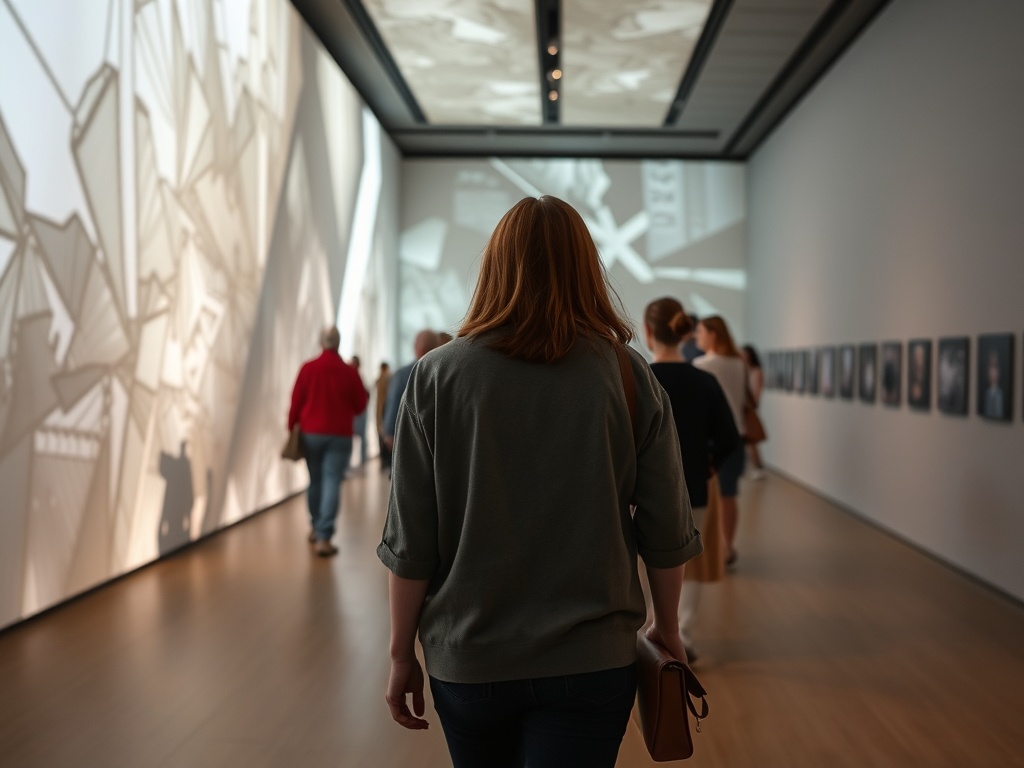
Early immersive exhibitions often sold a simple promise: step inside a famous artwork, color field, film world, or sensory environment. That promise still has appeal, but audiences now recognize the difference between a meaningful encounter and a photo backdrop. A large projection wall can be beautiful, yet visitors may leave with little understanding if the work lacks context, pacing, or a reason to care.
The better 2026 model treats the visitor journey as a sequence. There is an entry point that prepares attention, a central experience that creates emotional or intellectual focus, quieter zones for interpretation, and an exit that helps people connect the experience to the artist, collection, or theme. This structure is especially important when the subject involves cultural history, community memory, or living artists. Immersion should not flatten a subject into mood.
Institutions also need to distinguish entertainment venues from museum interpretation. Both can be valuable. The problem comes when an exhibition borrows the authority of art education while offering only spectacle. The Smithsonian American Art Museum describes itself as home to one of the largest and most inclusive collections of American art; that kind of institutional framing reminds experience designers that context, attribution, and stewardship matter as much as atmosphere.
Experience Design Moves Worth Watching
| Shift in 2026 | What it improves | Watch-out |
|---|---|---|
| Layered interpretation | Visitors can engage at beginner, family, and specialist levels. | Too much text or audio can interrupt the sensory flow. |
| Softer XR integration | AR, VR, and spatial audio can reveal details unavailable in a static display. | Hardware can distract, exclude, or become obsolete quickly. |
| Accessibility-first routing | More visitors can participate without asking for special treatment. | Retrofits are usually weaker than early planning. |
| Smaller timed-entry groups | Crowd control improves attention and safety. | Artificial scarcity can frustrate visitors if the experience is thin. |
| Post-visit digital material | Visitors can revisit context after the event. | Follow-up content should not feel like a marketing trap. |
The American Alliance of Museums’ Museum XR Summit reflects how seriously museums are studying immersive technologies, from virtual exhibitions to augmented experiences around artifacts. At the same time, arts organizations are operating under real financial pressure, which makes the dataArts national trends 2025 analysis useful for understanding why experience design must support both mission and sustainability.
The Audience Journey Is the Product
For immersive exhibitions, the “product” is not only the artwork, projection system, or ticket. It is the total journey: how visitors enter, orient, move, wait, interact, photograph, read, rest, and leave. A great installation can fail if the queue is chaotic, the captions are hard to find, the sound leaks into a quiet area, or people with mobility needs are routed through an inferior version.
This is why audience experience design now borrows from theater, museum education, hospitality, accessibility, and game design. A visitor may not notice the plan, but they feel it. They feel when a room lets them pause without being pushed. They feel when a transition gives them time to adjust from bright light to dark. They feel when a caption is placed where it can be read without blocking others. They feel when staff can answer questions without breaking the tone.
The same logic is shaping live work. In immersive theater and interactive performance, the audience role needs to be designed. In exhibitions, the audience path needs the same care. Both formats depend on trust.

Separating Durable Change From Hype
The durable change is spatial literacy. Curators, producers, and designers increasingly understand that audiences process information with their bodies as well as their eyes. A room’s scale, acoustics, seating, sightlines, and pacing can influence interpretation. This is not a gimmick. It is a design reality.
The hype is the assumption that immersion automatically modernizes culture. A projection-mapped wall does not make an exhibition contemporary if the interpretation is shallow. A headset does not make a collection accessible if the content ignores visitors with motion sensitivity, hearing differences, or low vision. A social-media-friendly room does not prove audience impact if people leave without understanding what they experienced.
Another durable shift is the blending of original art and experience design. Some artists work directly with spatial media, interactive sound, responsive lighting, and audience movement. In those cases, immersion is not packaging; it is the medium. The challenge is to avoid treating all art as raw material for spectacle. Designers should ask when immersion serves the work and when it simply overwhelms it.
Where Pressure Lands First
Museums and cultural venues feel the shift first because they must balance attendance, education, conservation, trust, and revenue. Immersive programming may bring new visitors, but it can also create high expectations and high costs. A venue should know whether the experience is meant to introduce a collection, deepen scholarship, attract family audiences, support tourism, or create rental revenue. Each goal leads to a different design.
Artists and estates are affected because immersive formats can reframe how work is seen. A large-scale digital environment may introduce a painter to audiences who would not visit a traditional gallery, but it can also detach the image from scale, texture, and historical context. Consent, licensing, and interpretive accuracy are essential.
Audiences are affected because the line between learning and entertainment is blurry. That can be positive. A playful experience can open the door to art history. But visitors deserve clarity about what they are seeing: original works, reproductions, adaptations, educational projections, or new commissioned pieces.
This also connects to AI-assisted music and sound. Exhibition teams using adaptive audio should study the rights questions raised in AI music tools in 2026 before placing synthetic sound in a public cultural setting.
Experience teams should also plan for fatigue. Immersive rooms can be loud, dark, crowded, and visually intense. Quiet exits, seating, plain-language labels, and staff who can redirect visitors without embarrassment are not secondary amenities. They shape whether the exhibition feels generous or extractive.
Build Experiences People Can Revisit
The best immersive exhibitions in 2026 are not only photogenic. They are legible, ethical, accessible, and worth discussing after the visit. They help people notice more, not merely consume more.
The practical test is simple: after the lights, projections, and phones are removed, does the visitor understand something they did not understand before? If the answer is yes, immersion has served the work. If the answer is no, the experience may be beautiful but empty.
Visitor takeaway alignment check: before approving an immersive exhibition concept, write the intended visitor takeaway in one sentence, then test whether every room, sound cue, label, and photo moment supports that takeaway.