Dental technology advances rapidly, and newer tools often deliver genuine improvements. But not every traditional technique has been surpassed — and for some clinical situations, established methods remain the most reliable choice.
Key Takeaways
- Newer technology improves certain procedures significantly; for others, the evidence base favours traditional approaches.
- The best dental care is not necessarily the most technologically advanced care — it is the most appropriate care.
- Cost, availability, and clinical setting all affect which approach is realistic.
- Patients benefit from asking about options rather than assuming digital or modern equals better.
The Case for Evaluating Technology on Its Merits
New dental technology tends to receive positive press because it often improves patient experience: less time in the chair, fewer impressions, faster turnaround. These are real benefits. But clinical outcomes — how well a restoration fits and lasts, how predictably a diagnosis is made — are the metrics that matter most. And on those metrics, newer tools do not always win.
Where Traditional Techniques Hold Their Ground
Impressions: Digital vs. Conventional
| Factor | Digital Scan | Conventional Impression |
|---|---|---|
| Patient comfort | Generally better — no trays or material | Can trigger gag reflex; messier |
| Accuracy in deep subgingival margins | Can struggle with blood and moisture | Polyvinyl siloxane handles moisture well |
| Turnaround | Immediate digital file | Lab shipping time required |
| Cost to practice | High equipment investment | Lower per-impression cost |
| Evidence for complex restorations | Growing but uneven | Decades of validated outcomes |
For straightforward single-crown cases with good tissue management, digital scanning performs comparably or better. For complex multi-unit cases or deep preparations where moisture control is difficult, some prosthodontists still prefer conventional polyvinyl siloxane impressions for their predictability.
X-Rays: CBCT vs. Periapical
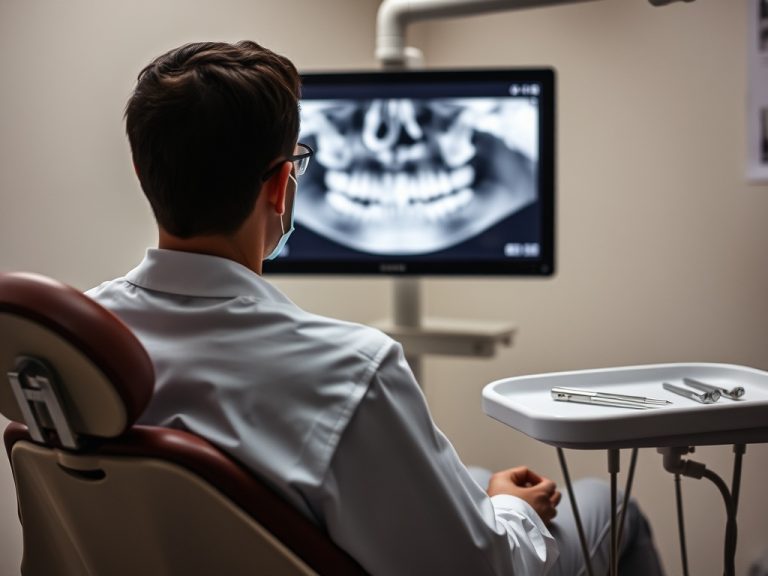
Cone beam CT (CBCT) scanning provides 3D imaging that has transformed implant planning and complex surgical cases. But for routine diagnosis of interproximal cavities and endodontic assessment, the standard periapical X-ray remains the reference standard — lower radiation dose, well-characterised diagnostic accuracy, and far lower cost.
CBCT is not a universal upgrade for dental X-rays. It is an additional tool with specific indications. The American Academy of Oral and Maxillofacial Radiology has published evidence-based criteria for when CBCT is clinically justified versus when conventional 2D imaging is sufficient.
Handpiece Drills vs. Laser for Cavity Preparation
Dental lasers offer genuine advantages for soft tissue procedures — gingivectomy, frenectomy, and aphthous ulcer treatment. For hard tissue cavity preparation, however, the evidence for laser superiority over conventional drills is not clear-cut. Most cavity preparations are still completed with high-speed or slow-speed handpieces because the cutting geometry and tactile feedback are better understood and more reliably executed by most practitioners.
Same-Day (CEREC) Crowns vs. Lab-Fabricated Crowns
CAD/CAM same-day crowns have improved significantly in material quality and fit accuracy. They are a genuine option for many single-tooth restorations. However, for aesthetically demanding cases — particularly in the anterior region — laboratory-fabricated crowns with a skilled dental ceramist still offer superior shade characterisation and surface texture. Shade planning is especially relevant when restorations must match existing crowns or veneers.
Where Technology Clearly Wins
Fairness requires acknowledging where the evidence clearly favours newer approaches:
- Digital radiography over film: lower radiation, instant access, no chemical processing
- Computer-guided implant surgery: measurably improves placement accuracy in complex cases
- Intraoral cameras: dramatically improve patient communication and diagnostic documentation
- Electronic apex locators for root canal length: more accurate and less radiation than radiographic guessing
A Framework for Evaluating Any Technology
- Does it improve clinical outcomes, or primarily improve workflow efficiency?
- Is there peer-reviewed evidence for this specific indication?
- What is the provider's experience and case volume with this technology?
- Is the cost premium justified by a concrete benefit in my case?
These questions apply whether you are evaluating a new scanning system, a laser treatment, or a material upgrade. The Journal of the American Dental Association regularly publishes systematic reviews on dental technology that provide a balanced evidence base.

What This Means for Preventive and Home Care
The technology-versus-tradition question is not limited to clinical procedures. Electric toothbrushes have solid evidence for superior plaque removal compared to manual brushes in many populations — a technology upgrade worth making. But some of the most valuable preventive habits remain thoroughly low-tech. Reviewing common home care mistakes that undermine these basics is a useful starting point regardless of what technology your dentist uses.
Calibrating Your Expectations
Scepticism about technology claims is reasonable; blanket rejection of newer tools is not. The most useful posture for patients is to ask about evidence and appropriateness rather than to assume newer means better or traditional means outdated. A phased treatment plan that integrates both digital and traditional methods based on clinical indication is often the most practical and cost-effective approach to complex care. Your dentist's ability to explain why they are recommending a specific approach — and what it achieves clinically — is a more meaningful indicator of quality than the equipment in the room.